
Flight
How do airplanes take off and land
RELEARN (Flight v.1)
On a recent flight to AZ, I was telling my daughter how I do not like to sit past the wing of an airplane because I do not like the feeling of the yaw motion. This statement led me to try to explain the fundamentals of flight to her which then made me fact-check myself days later to ensure I wasn’t sounding stupid.
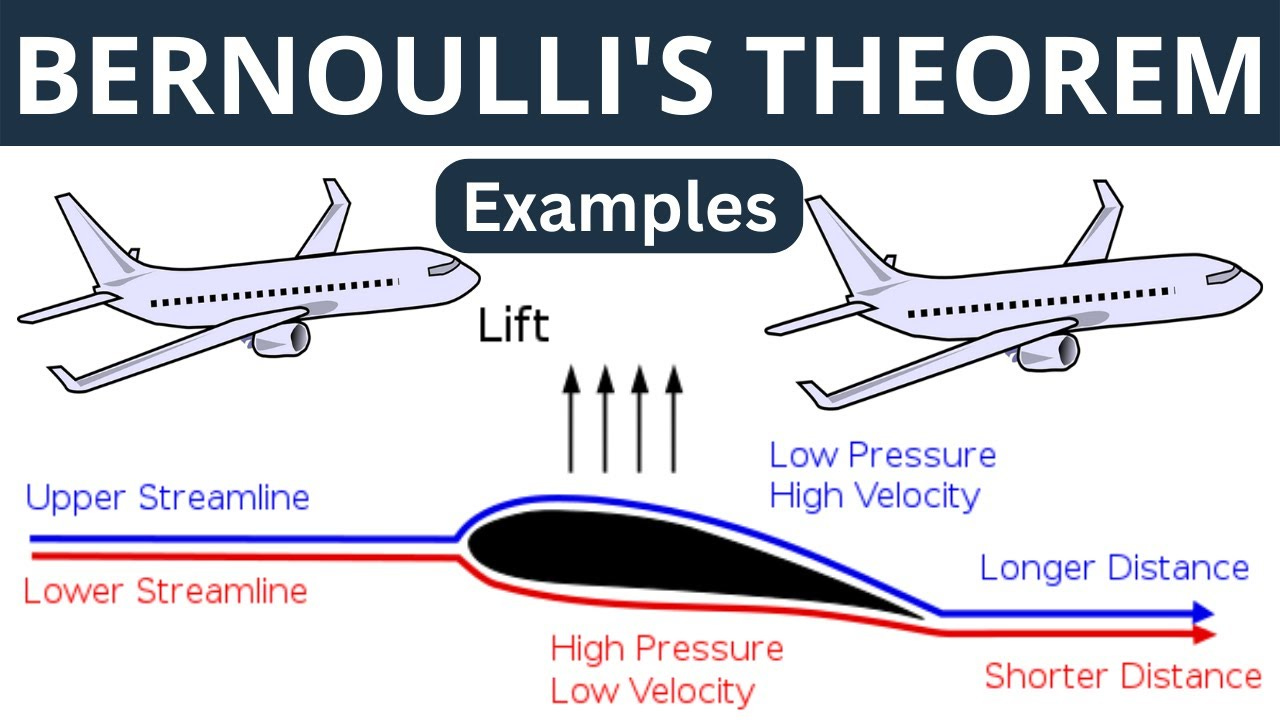
Airplanes achieve flight by harnessing Bernoulli’s principle on horizontal fluid (air). This principle states that as the speed of a fluid increases, the pressure within the fluid decreases and vice versa. An airplane’s wing, illustrated above, has a long upper side which makes the air above the wing travel faster creating lower pressure. The air traveling below the wing is moving slower because the distance is shorter which then means it has higher pressure pushing the wing upward. I’m sure you have seen the shape of the wing being adjusted by the pilot during take-off and landing which in return adjusts the amount of pressure being applied to the wing.
Airplanes can rotate on three axes when in flight:
Pitch:
Rotation around the lateral axis (wingtip-to-wingtip) causes the nose of the aircraft to move up or down.
The pilot controls pitch using the elevators (on the horizontal tail).
Roll:
Rotation around the longitudinal axis (nose-to-tail) causes the airplane to roll from left to right (one wing up, one wing down).
The pilot controls roll using the ailerons (on the wings).
Yaw:
Rotation around the vertical axis (up and down) causes the aircraft's nose to move left or right (like a rudder turning on a boat).
The pilot controls yaw using the rudder (on the vertical tail).
It is the yaw rotation that always makes me feel uneasy but it is necessary to turn into the air current to fly straight.
When an airplane lands it is actually in a controlled free fall not a gliding position as many think. To do this the pilot needs to control many things:
Flaps and Slats:
When an airplane is configured for landing, it deploys flaps and slats (movable panels on the leading and trailing edges of the wings) to increase lift and allow it to approach at a lower airspeed.
Angle of Attack:
The nose-up attitude on approach increases the angle of attack (the angle between the wing and the oncoming airflow), which helps generate lift at slower speeds.
Main Gear Touchdown:
When the airplane is in this nose-high configuration, the main (rear) landing gear touches down first, absorbing the initial impact of the landing.
Flaring:
Just before touchdown, pilots perform a maneuver called a flare, where they pull back on the control column to increase the nose-up pitch, decreasing the rate of descent and softening the landing.